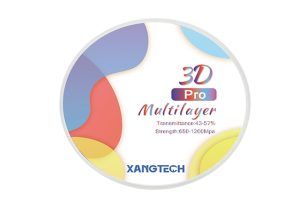
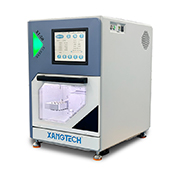
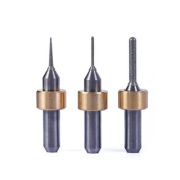

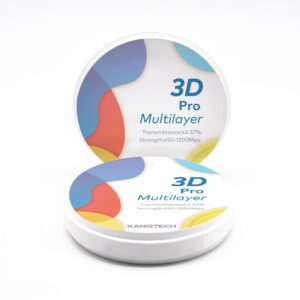
As digital technology continues to penetrate the field of oral healthcare, dental restorations are transforming from traditional manual fabrication to data-driven digital design, intelligent processing, and standardized production. The widespread adoption of technologies such as intraoral scanning, CAD/CAM, digital modeling, and CNC cutting has continuously improved the design precision, production efficiency, and process controllability of restorations, correspondingly raising the requirements for the comprehensive performance of dental materials. Modern restorative materials not only need stable mechanical properties but also require a balance between color, translucency, processability, biocompatibility, and production efficiency. For clinics and dental labs, materials are no longer simply processing media but a crucial component determining the efficient operation of digital restoration processes. XANGTECH 3D Pro multilayer zirconia ceramic blocks are a product solution developed under this technological trend. Through gradient zirconia materials, multi-layer optical structures, CAD/CAM processing adaptation, and rapid sintering modes compared to conventional methods, they provide comprehensive material support for modern digital dental restorations, covering aesthetics, function, and production efficiency.
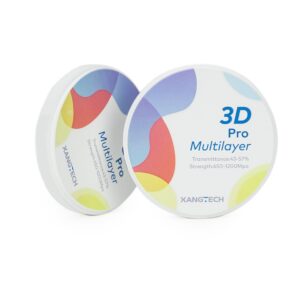
Natural teeth exhibit a distinct layered visual appearance. The neck, mid-section, and incisal edge regions are not entirely uniform in color, brightness, translucency, and light reflection; this continuous variation contributes to the realism of natural teeth. Therefore, the key to high-quality aesthetic restorations is not merely choosing a base color close to natural teeth, but rather creating a natural color and optical transition across different areas of the restoration. XANGTECH Dental 3D Pro zirconia blocks utilize a newly developed gradient zirconia material, incorporating different layers within the material and adjusting the physical and optical properties of each layer. This allows the sintered restoration to achieve a gradient effect that more closely resembles the structure of natural teeth. Compared to single-shade zirconia, the multi-layered design reduces the artificiality caused by abrupt color changes, creating a continuous visual transition from the neck to the incisal edge. This provides a more natural material basis for anterior crowns, veneers, and other restorations with high aesthetic requirements.
The value of this design also lies in its control over translucency. Natural teeth are not completely opaque; different areas of the tooth absorb, transmit, and reflect light to varying degrees. Therefore, if a restoration only matches the color but lacks adequate translucency, it may still appear noticeably different from adjacent teeth under natural light, indoor light, or different viewing angles. Our 3D Pro zirconia blocks combine color and optical performance through a multi-layered translucency design, resulting in a richer sense of depth after sintering. This material structure reduces the harsh visual effect of a single opaque tone while providing a foundation for technicians to perform personalized feature adjustments. For cases requiring precise aesthetic control, the pre-formed gradient characteristics of the material reduce some of the complex post-treatment color requirements, allowing technicians to focus more on adjusting shape, texture, and individual features.
Aesthetics does not equate to sacrificing function. The development of modern zirconia materials has gradually shifted from simply emphasizing high strength to prioritizing both mechanical and optical properties. Restorations need to withstand the mechanical forces of chewing and occlusion in the oral environment for extended periods; therefore, the strength, stability, and durability of the material are fundamental to its clinical application value. XANGTECH dental lab 3D Pro zirconia block ‘s material design balances mechanical performance and aesthetics, providing stable structural support for different types of restorations. For single crown restorations, a balance needs to be struck between a natural appearance and daily load-bearing capacity; for bridges and long-span bridges, increased span places higher demands on structural stability; for implant-supported restorations, the restoration structure, occlusal load, and long-term usage environment must be comprehensively considered. 3D Pro’s material properties enable it to cover these diverse application needs, maintaining necessary structural reliability while pursuing a natural appearance.
Material safety is equally crucial for dental restorations. Dental restorative materials are exposed to the complex oral environment for extended periods; therefore, in addition to strength and aesthetic performance, biocompatibility and long-term stability must also be considered. XANGTECH 3D Pro zirconia discs integrate mechanical properties, optical performance, and biocompatibility into a unified product design logic, enabling the material to meet the comprehensive performance requirements of modern restorations. For clinicians and technicians, this means that material selection no longer requires a simple trade-off between function and aesthetics, but rather allows for the development of more rational restorative plans within the material’s performance range based on specific cases.
Digital workflows further amplify the value of this comprehensive material performance. Traditional restorations rely on impressions, plaster models, and extensive manual operations, with each transfer potentially introducing errors. Digital workflows, however, directly translate the patient’s anatomical information into a design basis through oral data acquisition and digital model creation. Clinicians can plan restorative solutions based on digital data, and technicians can complete morphological, marginal, occlusal, and structural designs in a software environment. Then, CAD/CAM equipment performs cutting, followed by sintering to obtain the final restoration. Our dental 3D Pro multilayer zirconia blocks integrates into this complete workflow, creating a clear data link from material design to processing. Digital design reduces some repetitive manual operations and allows the restoration’s size and shape to be processed more accurately according to the predetermined design, thereby improving fabrication consistency and process predictability.
For dental labs, the compatibility between materials and digital equipment directly impacts production efficiency. If materials can be reliably integrated into existing CAD/CAM workflows, additional process adjustments can be reduced, creating a smoother transition between design, cutting, and sintering. Dental 3D Pro zirconia blocks‘s application logic doesn’t isolate materials from equipment and software, but rather designs them as a link in a digital production chain. Materials start from a digital model, are processed through cutting to form a pre-sintered restoration, and then sintered to achieve the final transformation in performance and morphology, allowing the entire process to be executed according to standardized procedures. This production method reduces reliance on purely manual experience and provides a foundation for scalable, repeatable, and stable restoration fabrication.
Production cycle time is also a constant concern in digital dentistry. Digital technology improves design and processing speed, but overall efficiency remains limited if subsequent material processing still involves long waiting times. XANGTECH 3D Pro denture zirconia blocks supports both rapid and conventional sintering modes, allowing material processing to be adjusted according to case and production schedules. The rapid sintering mode takes approximately two hours, effectively reducing waiting time in the sintering process for cases with high time constraints. Conventional sintering is suitable for cases completed according to a regular production schedule. The coexistence of these two modes allows clinics and laboratories to rationally schedule production based on order volume, case complexity, delivery time, and equipment availability, rather than being limited by a single production rhythm. This flexibility is particularly important for digital restoration production. As digital restoration orders increase, production capacity depends not only on the number of machines but also on whether the material handling process can match the front-end design and cutting. If the material processing cycle is too long, even with fast digital design and cutting speeds, it can easily create production bottlenecks at the back end. Rapid sintering provides a shorter production path for time-sensitive cases, while the conventional mode can meet the needs of routine production. By combining the two modes, laboratories can schedule production according to actual business conditions, improving equipment utilization while shortening the delivery cycle for some cases. For clinics, greater production flexibility also means more effective coordination of patient appointments and restoration fabrication schedules.
XANGTECH 3D Pro‘s applications are not limited to any single type of restoration. For single crown restorations, its multi-layered gradient effects can meet the requirements for natural color and translucency; for dental bridges and long-span bridges, the material’s mechanical properties provide support for the overall structure; for implant-supported restorations, digital design and fabrication can be performed according to the aesthetic and functional requirements of different areas. Anterior implant restorations typically place greater emphasis on the color, translucency, and visual harmony between the restoration and adjacent teeth, while posterior restorations focus more on structural stability under occlusal conditions. By combining material properties with digital design, the same material system can serve cases with different areas, structures, and aesthetic requirements. In high-aesthetic restorations, the combination of digital design and multi-layered materials is particularly significant. Digital technology can precisely control the shape, proportion, and spatial position of the restoration, while multi-layered zirconia provides color and translucency variations at the material level, addressing structural and visual issues respectively. For dentists, this allows for more precise design plans based on the patient’s oral structure and treatment goals; for technicians, it allows for control of the restoration’s shape in the digital model and the establishment of a basic color effect using the material’s inherent gradient characteristics. In this way, aesthetic restorations no longer rely entirely on post-treatment manual modifications, but are achieved through a combination of “digital design + material structure + necessary personalized treatment.”
Dental bridges, especially long-span restorations, place higher demands on material performance and digital design. The larger the span of the restoration, the more precisely control is required for the overall structural design, connection areas, and occlusal relationships. Relying solely on experience for fabrication not only increases the difficulty but also hinders the achievement of highly consistent results. Digital design helps technicians plan from the overall structure, adjust the restoration’s shape based on the patient’s actual oral data, and check and optimize the design before processing. XANGTECH 3D Pro zirconia ceramic blocks provides the material basis for this digital design, enabling the structural design to be ultimately transformed into a solid restoration through CAD/CAM processing. For complex cases, this continuity from data acquisition to final processing helps improve the controllability of the restoration plan. Implant restorations also place significant demands on the comprehensive performance of materials. Implant-supported restorations typically require simultaneous consideration of implant location, restoration space, occlusal relationships, adjacent tooth morphology, and the patient’s aesthetic expectations. The anterior region needs to minimize the visual difference between the restoration and natural teeth, while the posterior region requires full consideration of functional load. Its multi-layered structure provides a natural color and translucency base for anterior restorations, while mechanical properties provide structural support for functional areas. Combined with digital implant planning and CAD/CAM fabrication, more precise restoration designs can be completed according to specific cases, thus combining material properties with individualized treatment needs. For full-mouth and large-scale restorations, the value of digital technology is even more evident. Complex restorations often involve a large number of teeth, requiring simultaneous handling of dentition relationships, occlusion, tooth morphology, and overall aesthetics. In traditional methods, any local adjustment may affect other parts, while digital design allows for analysis and adjustment of the overall plan in a virtual environment, while retaining design data. This can serve as one of the material choices in digital full-mouth restorations, providing a unified color base through multi-layered zirconia, while utilizing CAD/CAM technology to complete the digital fabrication of multiple restoration units. For patients requiring overall restorations, this combination of materials and digital workflows helps doctors and technicians better control the overall effect, rather than just focusing on the fabrication of individual teeth.
As patients’ aesthetic demands continue to rise, the evaluation criteria for dental restorations are also evolving. Functional restoration remains the foundation of restorative treatment, but patients are increasingly demanding higher standards for color, translucency, shape, and overall harmony. Especially in the anterior teeth region, restorations need to maintain a natural visual appearance under different lighting and viewing angles, making the optical properties of materials an increasingly important evaluation factor. XANGTECH 3D Pro zirconium discs, through its multi-layered gradient structure, pre-integrates color and translucency variations into the material, giving the restoration a richer visual depth after sintering. For technicians, this material foundation reduces the complexity of some post-processing steps while retaining room for personalized modifications; for clinicians, it means further enhancing the predictability of aesthetic restorations based on digital fabrication. The expanding applications of zirconia also reflect the development direction of dental materials technology. In the past, zirconia was primarily understood from a strength perspective, but with advancements in materials technology, modern zirconia is beginning to simultaneously assume the roles of functional and aesthetic materials. Materials no longer simply need to be “strong enough” but also need to meet more complex clinical needs in terms of transparency, color performance, and processing efficiency. Its multi-layered design embodies this change, combining the structural properties emphasized by traditional zirconia with the optical performance focused on in modern aesthetic restorations, enabling the material to cover a wider range of applications. From a physician’s perspective, a mature digital restoration material should have clear, stable, and broad application boundaries. The clearer the material’s applicability, the easier it is for physicians to select based on the characteristics of each case when developing treatment plans. From a technician’s perspective, the material also needs to have good processing adaptability, allowing it to work with existing digital equipment and workflows. By balancing mechanical properties, aesthetic performance, digital processing, and sintering efficiency, it provides clinics and technicians with a more comprehensive material option. It does not simply optimize a single step, but rather takes a holistic approach to the restoration process, connecting material performance with clinical applications and production efficiency.
For XANGTECH, the ultimate value of technological innovation still needs to be validated through real clinical and production needs. In the future, whether digital dentistry evolves towards higher levels of automation or aesthetic restorations place higher demands on the optical performance of materials, XANGTECH will continue to adhere to a professional foundation, quality as its core, and customer needs as its guide, continuously improving product capabilities through ongoing R&D and long-term practice. Enabling materials to better serve digital design, making production processes more stable and efficient, and achieving a better balance between function and aesthetics in restorations are the directions XANGTECH continues to invest in. A truly trustworthy brand needs to withstand the test of product application, market changes, and time. XANGTECH will build stronger partnerships with global oral healthcare professionals through consistently stable quality, rigorous professional standards, and a long-term collaborative philosophy. As digital dentistry continues to develop, we will continuously explore new possibilities in material technology, participate in industry upgrades with reliable products and professional services, ensure that every collaboration is based on real value, that every trust is responded to through long-term quality, and drive modern dental restorations towards greater precision, efficiency, naturalness, and standardization through continuous innovation.