
The continuous advancement of digital technology is driving an evolution in production models within the dental restoration industry. From the acquisition of oral data and digital design to material processing and post-processing, a growing array of technological applications is being integrated into every stage of dental restoration, steering traditional workflows toward greater digitalization, standardization, and efficiency. In response to shifting market demands, dental clinics, dental laboratories, and milling centers must focus not only on the final quality of restorations but also on production efficiency, equipment performance, material compatibility, and the optimization of overall workflows. Enhancing comprehensive production capabilities through strategic product configuration and the application of technology has become a critical priority for the modern dental industry.
The widespread adoption of digital production models has introduced more flexible processing methods to dental restoration, while simultaneously imposing new requirements on materials and equipment. Given that different types of restorations vary in terms of structural design, material properties, and processing techniques, a single material or piece of equipment is rarely sufficient to meet all application needs. Restorations must not only possess excellent mechanical properties and dimensional stability but also meet specific standards for color, translucency, surface texture, and overall aesthetic performance. Consequently, the synergy between material characteristics, equipment processing capabilities, and process parameters has become a key factor influencing both the quality of restorations and production efficiency. By carefully selecting materials, optimizing processing routines, and establishing stable production workflows, dental laboratories can more effectively manage diverse restoration cases and improve the predictability and control of their production processes.
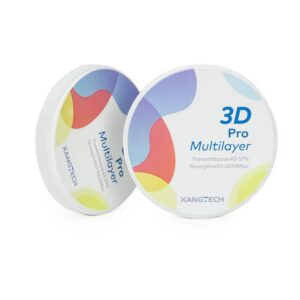
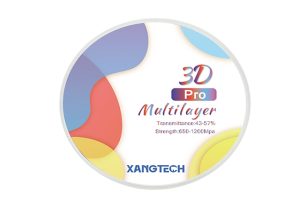
In the field of materials for digital dental restorations, zirconia continues to garner significant industry attention due to its mechanical properties, adaptability to processing, and ever-improving aesthetic performance. As material technology advances, zirconia products are increasingly evolving toward multi-layered structures, color gradients, and varying levels of translucency to meet diverse clinical restorative needs. XANGTECH 3D Pro multilayer zirconia discs features a gradient structure that ensures a natural transition in both color and translucency across different layers. It also supports rapid sintering, offering dental laboratories greater flexibility in balancing aesthetic outcomes with production efficiency. XANGTECH 4D Ultra multilayer zirconia, meanwhile, strikes a comprehensive balance between aesthetics and material performance; through its gradient design—encompassing color, translucency, and strength—it addresses the requirements of various clinical scenarios. Furthermore, it exhibits low wear characteristics and excellent polishability, making it suitable for a wide range of restorations, including full-arch and long-span cases. Selecting the right material based on its specific properties and the requirements of the restoration allows professionals to better align their design strategies with the material’s performance characteristics.
The advantages of a material can only be fully realized through appropriate processing techniques, and the performance of the equipment serves as a vital foundation for a stable production workflow. During the fabrication of zirconia restorations, the sintering process significantly influences the final product’s performance, morphology, and dimensional accuracy. Factors such as precise temperature control, uniform heating, well-configured sintering programs, and operational stability are critical considerations for dental laboratories. As processing requirements become increasingly diverse, modern dental sintering furnaces must offer more than just basic sintering capabilities; they require flexible programming, consistent performance, and the versatility to accommodate various material-specific processes. An optimal equipment setup enables laboratories to streamline production scheduling, meet the demands of different tasks, and ensure reliable, day-to-day operational support.
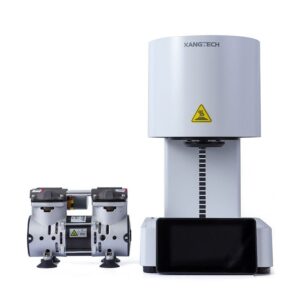
XANGTECH 12S zirconia sintering furnace supports both rapid and conventional (slow) sintering modes, allowing users to select the appropriate program based on specific material and process requirements—providing essential flexibility for varied production schedules. Designed with specialized heating elements and a robust structural configuration, the unit is engineered to meet the practical demands of sintering zirconia restorations, helping dental laboratories maintain both high processing efficiency and process adaptability in their daily workflows. In a production environment that handles various types of restorations and materials, equipment offering multiple sintering modes provides greater flexibility, allowing operators to tailor processing programs to the specific requirements of each case.
Beyond zirconia sintering, processes such as ceramic firing, glazing, and the crystallization of glass-ceramics also demand stable and precise equipment. Since different ceramic materials have unique requirements regarding firing temperatures, heating rates, holding times, and vacuum conditions, the temperature control performance and program management capabilities of the equipment are critical to the stability of the fabrication process. The XANGTECH XT-PF100 porcelain furnace features a high-precision, closed-loop temperature control system that ensures excellent temperature uniformity with minimal deviation. It is also equipped with a high-performance vacuum system and supports multi-stage heating, holding, and cooling cycles. With a maximum operating temperature of 1200°C, the unit is well-suited for firing veneering porcelain, glazing, crystallizing glass-ceramics, and other related ceramic processing tasks. Combined with a touchscreen interface and customizable programming, it offers dental laboratories greater versatility in process configuration, effectively meeting the diverse needs of various ceramic fabrication workflows.
In a digital restoration workflow, data acquisition serves as a critical link between the clinical environment and the dental laboratory. Accurate intraoral data provides the foundation for subsequent restoration design and fabrication. Factors such as the ease of operating the scanning device, the design of the scanner tip, user comfort, and the methods for cleaning and disinfection all significantly influence the practical user experience. The XANGTECH XT-OS33 intraoral scanner features a compact tip design, facilitating access to various areas within the oral cavity—even in confined spaces. The device incorporates an anti-fog heating system and an ergonomic handle to optimize the scanning process, while the detachable tip design simplifies cleaning and disinfection. By capturing intraoral data through digital scanning and integrating it into downstream design and fabrication workflows, dental professionals can further advance the adoption of digital dentistry.
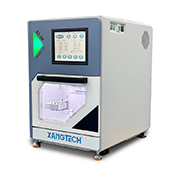
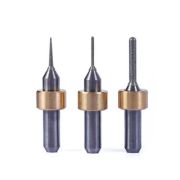
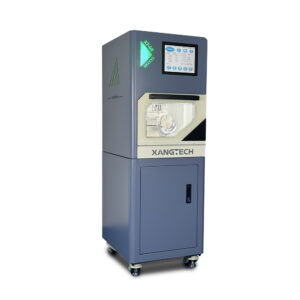
As the demand for digital fabrication continues to grow, dental milling machines have become increasingly vital in the production of restorations. Key factors influencing the practical value of such equipment include machining precision, spindle performance, tool configuration, operational stability, and the flexibility of milling methods. Since different restorative materials require specific processing approaches, the ability to perform both dry and wet milling offers dental laboratories greater versatility. XANGTECH XT-60 dry and wet milling machine—is equipped with a 2.5 kW spindle and an automatic tool changer with 21 positions, achieving a repeatability of ±3 μm. By integrating various milling modes with automated features, the system addresses diverse digital fabrication needs, helping dental laboratories enhance production efficiency, optimize workflows, and allocate production resources more effectively.
The final quality of a restoration depends not only on the initial design and fabrication phases but also on subsequent surface treatment, which is essential for achieving an optimal clinical outcome. For ceramic and fixed restorations, the surface luster, color harmony, translucency, and overall texture must align with the original design. Dental glazes can be applied during the surface treatment stage to impart a natural-looking luster while providing a protective layer for the restoration surface. XANGTECH dental glaze paste is designed for fixed restorations, such as crowns and bridges, and is compatible with a wide range of dental ceramics and related restorative substrates. Its transparent, high-gloss fired finish enhances the surface aesthetics of the restoration, while its fluorescent properties ensure a natural appearance under various lighting conditions. Through appropriate surface preparation and material application, dental professionals can further refine the details of a restoration, achieving an optimal balance between functional performance and aesthetic requirements.
XANGTECH specializes in the R&D, production, and sales of dental restorative materials and equipment. Its product portfolio encompasses multilayer zirconia, dental sintering furnaces, porcelain furnaces, intraoral scanners, milling machines, dental glazes, and other restorative-related products. By closely monitoring trends in the digital dentistry sector and the practical needs of its clients, XANGTECH is committed to refining its product ecosystem to provide a diverse range of solutions for dental clinics, dental laboratories, milling centers, and distributors. Whether regarding material applications, equipment configuration, or specific stages within the digital restoration workflow, XANGTECH strives to create greater value for its clients through professional products and services, fostering long-term, stable partnerships.
As digital dental technology continues to mature, the industry’s future development will increasingly focus on processing efficiency, material innovation, equipment performance, and the synergy of comprehensive solutions. In an ever-evolving market, XANGTECH remains dedicated to product quality, professional service, and a customer-centric approach. The company continues to advance its product ecosystem and technological capabilities, working alongside global partners in the dental industry to explore new possibilities in digital restoration and provide consistent, reliable support to the modern dental sector.


