As digital technology continues to penetrate the field of dental restoration, restorative materials are evolving from a focus on a single performance characteristic to one that emphasizes strength, aesthetics, stability, and processing efficiency. From early metal-ceramic composites to feldspar porcelain, glass ceramics, and high-strength zirconia, the application of different materials has expanded, driving higher demands on the comprehensive performance of materials in dental restorations. Metal-ceramic composites possess good mechanical strength, but the metal substrate can obstruct light, limiting their use in restorations with high aesthetic requirements. Traditional glass ceramics offer excellent translucency and a natural appearance, but their mechanical properties are relatively limited. Zirconia, with its high strength and stability, has expanded its application range for posterior teeth and complex restorations, but its optical performance still differs somewhat from the natural optical characteristics of natural teeth. In this development process, lithium disilicate, with its good balance between strength, translucency, and processing performance, has gradually become an important material in modern all-ceramic restoration systems.
However, for dental restorations, the actual application value of a material cannot be determined by any single performance characteristic. Restorations need to withstand chewing pressure, shear forces, and continuous cyclic loads in the complex oral environment over a long period. Therefore, the materials must possess stable mechanical properties to reduce the risk of crack propagation, marginal damage, and restoration fracture. Simultaneously, restorations also need excellent optical performance, mimicking the visual effect of natural teeth more naturally through appropriate translucency, color representation, and light transmission characteristics. Especially in anterior tooth restorations, the optical properties of the materials directly affect the final color harmony, depth, and overall aesthetics.
Beyond strength and aesthetics, the chemical stability and adaptability of materials to the oral environment are crucial for clinical application. Good material stability helps maintain the performance of restorations over long-term use, while reliable bonding directly affects the retention and stability of all-ceramic restorations. Furthermore, with the increasing prevalence of digital dentistry, materials must also adapt to processes such as CAD/CAM design, digital milling, crystallization, and post-processing. The stability, marginal appearance, and ability to reproduce fine anatomical structures during processing further influence the quality and fabrication efficiency of the final restoration.
Lithium disilicate has garnered widespread attention precisely because it achieves a relatively ideal balance across multiple performance dimensions. Through precise control of the glass matrix and crystal structure, lithium disilicate can balance sufficient mechanical properties with excellent optical performance, while also possessing good processing adaptability, making it applicable to various restorative scenarios such as veneers, inlays, partial crowns, and full crowns. For modern digital restorations, this comprehensive performance not only meets diverse restorative needs but also better adapts to the requirements of digital design and processing for material precision, consistency, and processing efficiency.
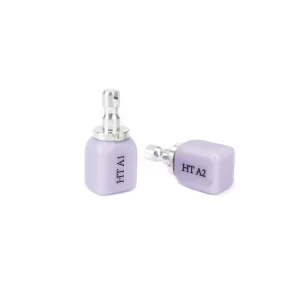
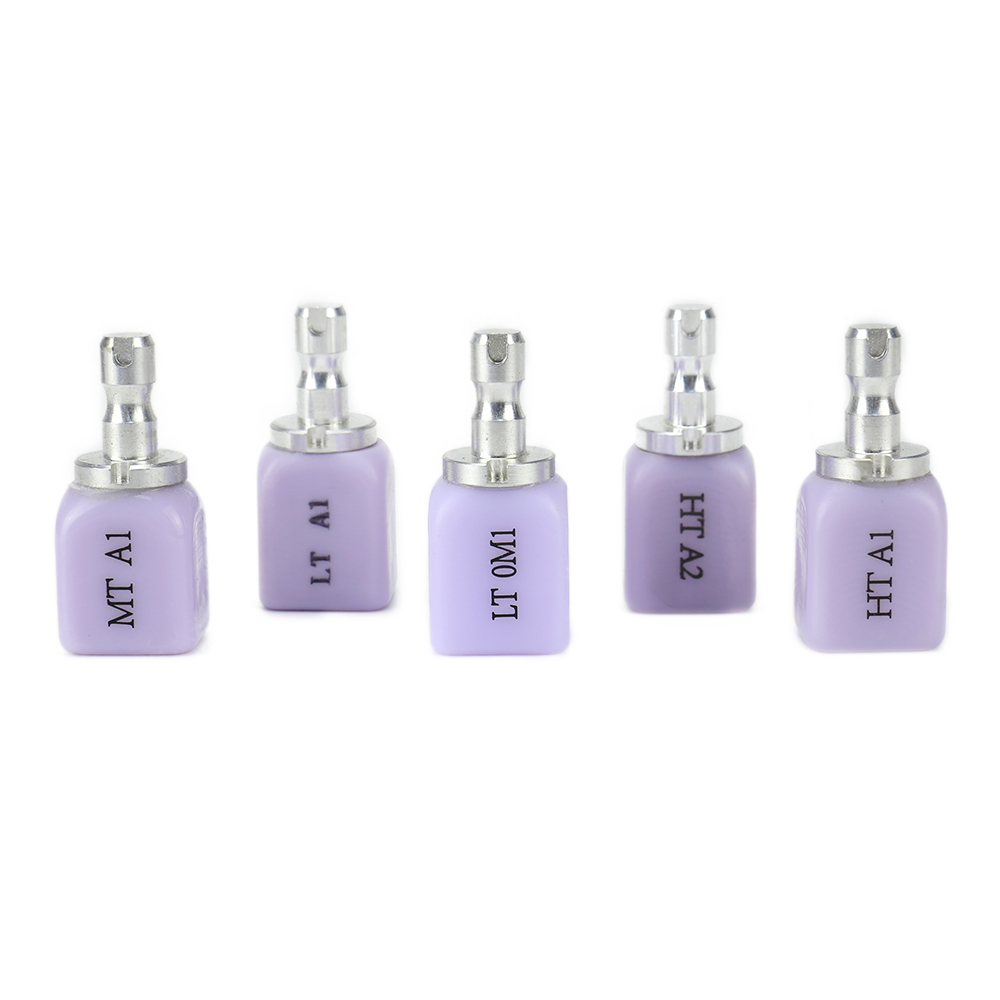
XANGTECH dental lithium disilicate block, based on microstructure control and optimized material processing technology, provide a stable mechanical performance foundation for restorations. The material possesses a dense and uniform microstructure; through rational control of crystal morphology, size, and distribution, it can more stably withstand compressive stress, shear force, and cyclic loads generated during chewing. The uniformly distributed crystal structure can, to some extent, inhibit crack propagation and helps improve the material’s flexural strength and fracture toughness, providing more reliable structural support for the restoration.
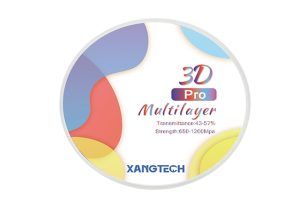
In terms of aesthetics, XANGTECH glass ceremic blocks, through precise control of crystal structure and heat treatment processes, gives the material natural translucency and color. Reasonable light transmission reduces the harsh visual effect that may occur with traditional monochrome ceramics, allowing the restoration to present a more natural visual depth. Under natural light and various artificial light sources, its excellent optical properties help the restoration achieve a more harmonious color and translucency, resulting in a more natural transition with surrounding natural teeth. For anterior tooth restorations, this comprehensive control over color, translucency, and visual hierarchy helps meet the clinical application needs that demand high natural aesthetic results.
The aesthetic effect of a material depends not only on its color but also on how its internal structure transmits and scatters light. XANGTECH optimizes the microstructure and manufacturing process of lithium disilicate to achieve a reasonable balance between translucency and structural performance. This satisfies the mechanical stability requirements of restorations while also presenting an optical effect closer to natural teeth. This comprehensive material design philosophy allows restorations to maintain a solid structural foundation while also considering visual appeal, thus adapting to the modern dental trend of prioritizing both functional and aesthetic restorations.
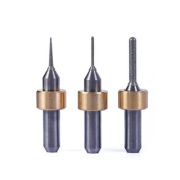
In actual fabrication, the stability of the material itself also determines the final quality of the restoration. Digital dentistry digitizes the restoration process through oral scanning, CAD design, and CAM machining. However, digital designs can only be truly transformed into high-quality final restorations after a stable material processing process. Blocchi di disilicato di litio XANGTECH are compatible with digital processing workflows, maintaining good edge integrity and detail reproduction during milling, allowing technicians to more accurately realize the anatomical morphology in the digital design. For delicate structures such as cusps, pits, and margins, stable processing performance helps reduce unnecessary subsequent adjustments and improves the controllability of the fabrication process.
After milling, crystallization and post-treatment processes are also crucial to the final performance. A stable crystallization process helps the material achieve the expected structural and optical properties and reduces problems such as microcracks and edge chipping caused by process fluctuations. XANGTECH disilicato di litio maintains more stable performance from the processing stage to the final restoration stage through strict control of material production and heat treatment processes, while also helping to improve the consistency between different batches of products. For dental laboratories, technicians, and digital cutting centers, stable material performance reduces unpredictable variations during processing, making the entire restorative process more efficient and controllable.
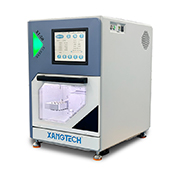
With the further development of CAD/CAM technology, digital restoration has gradually shifted from simple digital design to standardized, refined, and streamlined production. In this process, restorative materials not only need to adapt to digital equipment but also need to form a stable connection with the entire digital workflow. The material’s processing performance, dimensional stability, crystallinity, and final optical effect all need to match the precision of the digital design. XANGTECH lithium disilicate ceramic blocks optimize material performance and manufacturing processes around the digital restoration process, enabling materials to better integrate into the entire process from design to processing, from crystallization to final restoration, providing more stable material support for digital dentistry.
For the same material system, the final performance does not entirely depend on the material name or a single laboratory parameter. Factors such as raw material quality, crystal structure, molding process, production environment, and heat treatment precision all affect product performance. Therefore, a stable manufacturing system and strict quality control are also important components of high-quality dental materials. Starting with the selection and processing of raw materials, XANGTECH strictly controls multiple key aspects of the production process. By optimizing material formulations, structural control, and heat treatment processes, it reduces internal defects and batch-to-batch variations, resulting in more stable and consistent product performance.
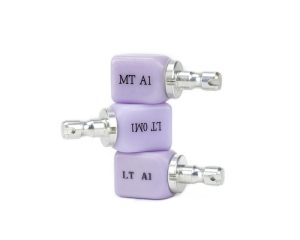
Modern dental restoration is gradually shifting from traditional experience-based fabrication to digital, standardized, and refined production. Materials, as a crucial link between digital design and the final restorative effect, directly impact the efficiency and final outcome of the entire workflow. In the future, dental restorative materials will not only need to continue improving their mechanical properties and aesthetics but also adapt to the development of digital equipment, processing technologies, and standardized production models. XANGTECH continuously focuses on dental material technology and the needs of digital restoration. Through continuous optimization of material structure, manufacturing processes, and quality control, XANGTECH constantly improves product stability and consistency, providing dentists, dental technicians, and digital processing institutions with a more reliable material foundation. With rigorous manufacturing standards and continuous technological accumulation, XANGTECH supports the development of modern dental restoration towards greater efficiency, precision, and stability.