As digital technology continues to permeate the field of oral healthcare, dental practice is shifting from traditional physical impressions and manual record-keeping toward a digital data-driven model. Serving as a crucial entry point for the digital workflow, intraoral scanning is responsible for capturing 3D oral data; the quality of this data and the efficiency of the scanning process not only impact downstream digital design and fabrication but also influence the clinician’s experience and the communication between doctor and patient. Consequently, the true value of an intraoral scanner extends beyond mere imaging capabilities; the device must also be adapted to real-world clinical environments in terms of scanner head design, temperature control, ergonomic handling, connectivity, disinfection and maintenance, and data visualization. Addressing these needs, the XANGTECH XT-OS33 intraoral scanner is designed with a focus on key aspects of clinical use, incorporating various hardware and software optimizations to provide a more convenient and stable operational experience for digital oral data acquisition.
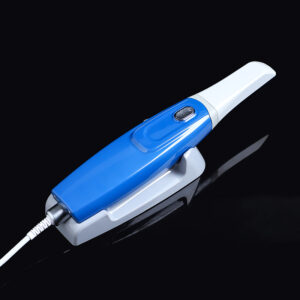
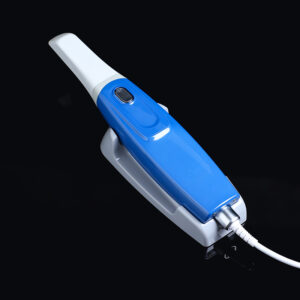
Given the confined space of the oral cavity and the varying requirements for scanning angles and operational paths depending on tooth location, the size and structure of the scanner tip directly impact the device’s flexibility in actual use. The XT-OS33 features a compact scanner tip, providing clinicians with greater maneuverability within the limited oral space. Practitioners can adjust the scanning direction according to the specific area—whether dealing with anterior or posterior teeth—and the compact tip facilitates precise angle control, particularly when accessing the posterior region or treating pediatric patients. Rather than focusing solely on technical specifications, optimizing the structural design to suit the characteristics of the oral cavity aligns the device more closely with clinical workflows and reduces the operational strain associated with scanning complex tooth positions.
Lens clarity is another critical factor influencing the continuity of data acquisition during the scanning process. Significant temperature differences between the oral cavity and the scanner lens often lead to fogging upon entry, which obscures the field of view and can interrupt the scan. The XT-OS33 incorporates an internal rapid-heating and constant-temperature system; this allows the device to quickly reach operating temperature and maintain stability during use, thereby minimizing lens fogging caused by temperature differentials. A clear, stable field of view reduces the need for repeated adjustments during the procedure, enabling more continuous data acquisition, while the constant-temperature control also enhances patient comfort. For scenarios requiring prolonged intraoral scanning, this temperature control design further ensures operational continuity.
Regarding the scanning structure, the XT-OS33 features a scanner head mirror angled at approximately 45°, providing appropriate viewing paths for various tooth positions. Since the anterior and posterior regions differ in location, available space, and optimal viewing angles, a fixed operational approach cannot accommodate every area; however, a well-designed mirror angle allows clinicians to adjust the device’s orientation naturally during scanning. In cases involving complex tooth alignment or limited oral space, this ~45° design minimizes unnecessary angular adjustments during operation. When combined with the compact scanner head, it ensures the device can effectively meet scanning requirements across different tooth positions.
Beyond the scanner head, the handle design is crucial for stability during continuous operation. Intraoral scanning requires clinicians to move the device constantly while maintaining a steady scanning path; excessive weight or poor grip ergonomics can lead to hand strain during prolonged use. The XT-OS33 features a streamlined, ergonomic handle and weighs approximately 210 grams, balancing weight control with grip stability. This ergonomic design aligns with natural handling habits, allowing clinicians to adjust scanning directions fluidly during data acquisition and reducing the physical strain associated with holding the device. Lightweight design is not merely about reducing size; it involves structural engineering that harmonizes weight, grip mechanics, and practical operational needs.
Hygiene management and sterilization protocols are also critical considerations in a dental clinical setting. The XT-OS33 utilizes a detachable scanner head design, allowing for quick attachment and removal without the need for additional tools. For medical facilities requiring frequent use across multiple patients, this structure simplifies the replacement process and enhances the convenience of daily device management. Furthermore, the scanner head supports both immersion disinfection and autoclave sterilization, enabling facilities to select the method best suited to their equipment capabilities and internal protocols. By integrating sterilization and maintenance requirements into the structural design, the device not only meets clinical performance standards but also adapts effectively to the realities of the dental practice environment.
Connection stability is a fundamental factor influencing the continuity of digital scanning. The XT-OS33 utilizes a Type-C data interface, reinforced by an aluminum alloy housing and a threaded locking mechanism. Compared to standard plug-in connections, this locking design minimizes the risk of contact issues caused by cable movement or loosening during scanning, thereby ensuring more stable data transmission. The device employs a direct-connection approach—eliminating the need for extra adapters—which simplifies the setup process and facilitates quick installation and use in clinical environments. This stable connection provides a reliable foundation for the entire workflow, particularly when the scanning process requires the continuous acquisition of large volumes of 3D data.
In digital dental practice, scan results serve not only as input for subsequent data processing but also as a valuable tool for explaining oral conditions to patients. The XT-OS33 supports high-fidelity color data acquisition, generating chairside 3D color models that capture both tooth morphology and color information. Unlike relying solely on verbal explanations or 2D images, 3D color data presents oral structures intuitively, making it easier for patients to visualize the specific areas and issues described by the clinician. For instance, when discussing conditions such as caries, plaque, or wedge-shaped defects, clinicians can use the digital model to directly demonstrate the location and morphology of the issue, transforming abstract professional descriptions into clear, visual information. These digital models also provide a solid data foundation for scenarios requiring detailed treatment plan discussions or multi-party consultations.
To minimize extra steps during daily operation, the XT-OS33 features a factory pre-calibration design; once calibrated at the factory, the device requires no periodic recalibration during clinical use. For medical institutions, this reduces preparatory work before the device enters service, allowing clinicians to focus more on the actual scanning process. Combined with the direct-connection structure and tool-free replaceable scanning tips, the device streamlines connection, usage, and maintenance, enabling digital scanning to integrate seamlessly into daily clinical workflows.
Language localization of the software interface is crucial for the user experience when addressing application needs across different countries and regions. The XT-OS33 software supports 15 languages—including Polish, Spanish, and Russian—facilitating ease of use for practitioners in diverse linguistic environments. This multilingual capability not only minimizes language barriers during operation but also meets the practical deployment requirements of various markets and medical institutions, enabling digital dental technology to adapt effectively to diverse application settings.
From its compact scanning tip and ~45° scanning geometry to its rapid-heating constant-temperature system and lightweight (210g), ergonomic handpiece, the XT-OS33 reflects a systematic approach to clinical operational details. The device goes beyond a simplistic view of digital scanning as mere data acquisition; instead, it optimizes the entire process—encompassing clinical operation, patient experience, device maintenance, and data communication. 3D color imaging further enhances the utility of the scan data, allowing oral information to serve not only downstream digital workflows but also act as a more intuitive medium for information during diagnosis and treatment.
The evolution of digital dentistry is fundamentally about the continuous optimization of treatment methods, data processing, and clinical workflows. For intraoral scanners, successful clinical integration depends not only on scanning performance but also on the product’s ability to address real-world operational challenges. The XT-OS33 features targeted designs addressing factors such as intraoral accessibility, field of view, handling ergonomics, data connectivity, sterilization, and information display, ensuring that digital data acquisition aligns closely with actual clinical needs. Its overall design embodies a shift from single-functionality to a comprehensive clinical experience, empowering practitioners to conduct digital workflows more efficiently and intuitively.
As digital dentistry continues to evolve and clinical needs become increasingly specialized, industry demands regarding equipment stability, operational efficiency, user experience, and digital integration capabilities are rising. XANGTECH remains focused on the practical application requirements of digital dentistry; grounded in technological R&D and product innovation, the company continuously refines its product portfolio and service ecosystem within the sector. Through a deep understanding of clinical workflows and the continuous optimization of product details, XANGTECH is dedicated to building a stable, professional brand that delivers long-term value. Amidst a dynamic market, the company maintains its commitment to technological advancement, providing consistent and reliable support for the global digital dentistry landscape while earning the trust of customers and partners through professional quality and a solid track record.