
Zirconia is no longer a novelty in the field of dental restoration. Thanks to its exceptional strength, excellent biocompatibility, and a level of translucency that increasingly resembles that of natural teeth, zirconia has become a mainstream material for fabricating dental crowns, bridges, and implant-supported restorations. However, a crucial fact—often overlooked—is that the final quality of a zirconia restoration depends not only on the material itself but, even more significantly, on the final sintering process. The strength, translucency, and dimensional accuracy of a dental crown are, to a large extent, determined within the sintering furnace.XANGTECH 12S dental zirconia sintering furnace was designed with this in mind, with a clear objective: to provide dental laboratories and clinics with a solution that ensures fast, stable sintering and long-term durability.
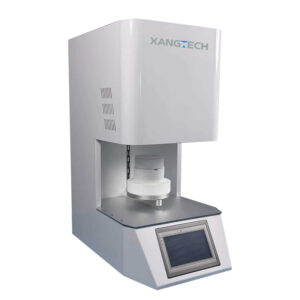
This device utilizes high-quality, domestically produced molybdenum disilicide (MoSi₂) heating elements. These elements offer excellent high-temperature resistance and oxidation resistance, ensuring stable, long-term operation within the 1400°C to 1600°C range—the most common temperature zone for sintering zirconia—without rapid degradation. Compared to traditional alloy resistance wires, MoSi₂ elements exhibit a slower decline in power output and a longer service life. While the initial investment is higher, the cost per sintering cycle proves more economical in the long run. A particularly practical feature of the heating system is its dual-mode operation. The “fast heating” mode is designed for high-volume, routine zirconia production; it enables rapid temperature increases and shorter sintering cycles, allowing for more batches per day—a tangible benefit for laboratories that prioritize throughput. The “slow heating” mode, which features a more gradual temperature rise, is specifically engineered for highly translucent, multi-layered zirconia materials. Such materials are sensitive to temperature fluctuations; heating them too quickly can lead to incomplete crystalline phase transformation, resulting in reduced translucency and a failure to achieve the intended color gradient. A slower heating process ensures a more complete phase transformation and the full release of internal material stress, ultimately yielding restorations with superior aesthetic quality. This dual-mode capability means laboratories do not have to compromise their choice of materials to accommodate the equipment’s heating limitations, as suitable sintering curves can be configured for zirconia from various brands.
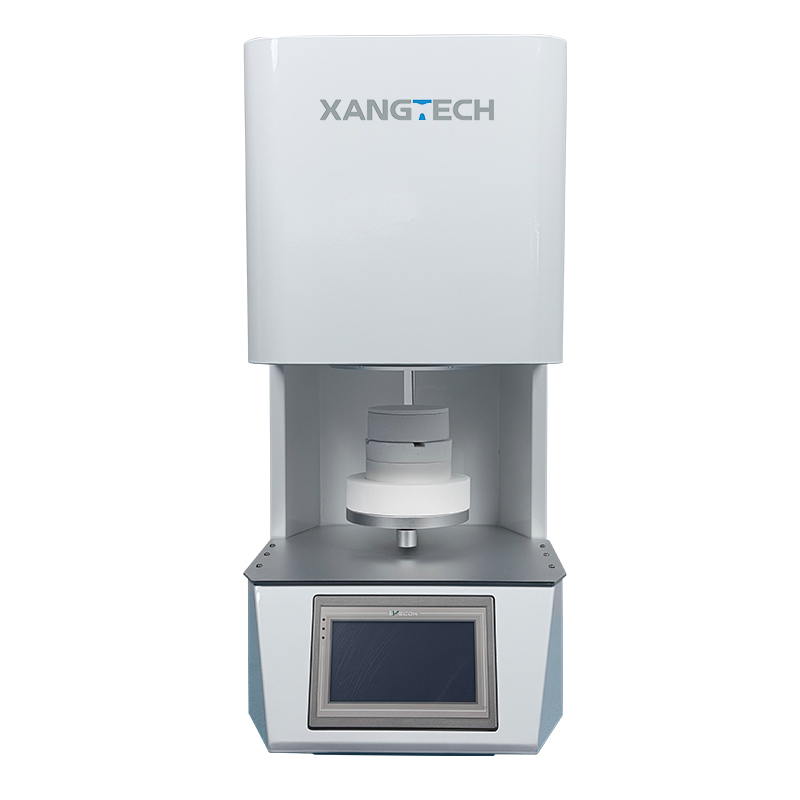
The positional accuracy of the sintering platform—specifically where it stops after each elevation—directly influences the uniformity of the temperature distribution within the furnace chamber. If the platform’s stopping position varies, the relative height of the dental crowns within the chamber shifts, altering thermal radiation conditions and potentially causing temperature discrepancies among products in the same batch.XANGTECH 12S sintering furnace employs a lifting system that integrates high-precision ball screws with linear guide rails. This transmission mechanism is a mature, reliable solution in industrial equipment, characterized by high efficiency, precise positioning, and negligible backlash. In short, the platform stops accurately every time with no height drift; guided by the linear rails, it moves without any lateral wobbling, ensuring that mechanical precision is maintained over the long term. The furnace features a fully enclosed heating chamber, where the high-temperature zone is completely sealed within a space formed by the furnace body and the insulation layer. This design offers several key advantages: First, it enhances safety—the insulation layer isolates the outer casing from the high-temperature zone (which can exceed 1000°C), protecting operators from burns during loading and unloading. Second, it improves energy efficiency by minimizing heat loss, thereby requiring less power to maintain the target temperature. Third, it ensures superior thermal uniformity; the enclosed structure shields the interior from external airflow disturbances, resulting in a more stable heat distribution. Fourth, it protects the heating elements—by limiting the exposure of MoSi₂ elements to oxygen and moisture in the ambient air, the design significantly extends their service life.
As high-temperature equipment, the sintering furnace demands an exceptionally high level of safety. It incorporates multiple independent protection mechanisms to address this. High-temperature protection serves as the primary line of defense: in addition to the main temperature control system, the unit features an independent over-temperature monitoring channel, creating a redundant configuration. Should the main temperature controller or thermocouple fail—causing a drift in temperature readings—this independent channel can still detect the risk of overheating and trigger a hardware-based relay to cut off power to the heating elements, bypassing software-dependent logic. This hardware-level redundancy minimizes the risk of thermal runaway. Overcurrent protection addresses abnormal currents within the heating circuit; if a current surge occurs—due to the aging of MoSi₂ heating elements or a short circuit—the protection system immediately cuts off power once a preset threshold is exceeded, preventing damage to the heating elements and internal circuitry. Another critical, yet often overlooked, safeguard is fan-failure protection. During operation, cooling fans dissipate heat from the furnace body and the electrical cabinet; if a fan stops—due to a burnt-out motor or a seized bearing—heat can accumulate, potentially damaging electrical components. The equipment includes a built-in rotational speed monitoring module; if an abnormal fan speed is detected, the system automatically halts heating and cuts off the power supply. Furthermore, the unit is equipped with an audible alarm that alerts the operator whenever any of these protection mechanisms are triggered. This multi-layered safety system ensures that the equipment can shut down safely in the event of an anomaly, rather than continuing to operate in a faulty state.
XANGTECH 12S zirconia sintering oven features an effective furnace chamber measuring 130 mm in width and 125 mm in height. These dimensions were determined based on the typical specifications of dental restorations and the daily loading requirements of dental laboratories: the width comfortably accommodates standard dental crown trays, while the height supports multi-layer loading, maximizing space utilization. Compared to its predecessor, the furnace capacity has been increased, allowing for a greater number of crowns to be sintered in a single batch. For high-volume laboratories, this reduces the number of daily sintering cycles required, saving time on loading, unloading, and startup procedures. While increased capacity is advantageous, it is only effective if a uniform temperature field is maintained. If the chamber is enlarged but temperatures vary across different locations, crowns within the same batch may exhibit inconsistencies in size or color.XANGTECH 12S zirconium sintering furnace addresses this through meticulous design: the thickness and density of the insulation materials, the arrangement of heating elements, and the positioning of thermocouples have all been optimized to ensure temperature uniformity. Test data indicate that, under standard loading conditions, temperature deviations across different locations within the chamber are kept within an acceptable range. Consequently, crowns in the same batch maintain excellent consistency in terms of shrinkage, translucency, and strength, resulting in lower rework rates.
XANGTECH 12S is equipped with a 7-inch color touchscreen. The screen has been hardened to resist scratches and chemical agents, making it well-suited for the dental laboratory environment. The touch sensitivity is calibrated to allow for operation while wearing gloves—even medical protective gloves—ensuring a smooth user experience. The main interface provides an at-a-glance view of all critical operational information, including current temperature, the active process stage, the sintering program number, remaining time, platform position, and system self-check status, eliminating the need to navigate through multiple menu layers. The device comes with pre-set templates for fast and slow sintering programs, which are easy to access. Additionally, authorized operators can customize parameters—such as heating rate, holding temperature, holding duration, and cooling rate—to align with the processing recommendations provided by various material manufacturers. Regarding data management, the device is capable of storing a full year’s worth of sintering history. During each sintering cycle, the system records temperature data points at fixed intervals, associating them with metadata such as the date, start time, program number, and operator ID. Operators can retrieve historical sintering curves—organized by date or batch—to overlay and compare them. This feature is highly valuable in practical production: quality managers can use it to verify the consistency of temperature control across different batches; if issues arise with a specific batch of dental crowns, technicians can examine the corresponding sintering curve to identify any abnormal fluctuations during the heating, holding, or cooling phases, enabling rapid root-cause analysis. Furthermore, process engineers can optimize workflows by correlating sintering curves—generated under various parameter settings—with the final product quality.
The user interface of XANGTECH dental 12S sintering furnace supports eight languages—Chinese, English, Spanish, Russian, German, French, Italian, and Romanian—covering major global markets for dental equipment. For international operations, users can switch the interface to their native language, ensuring an accurate understanding of parameters without the need for external translation or additional training. From an operational risk perspective, this localization minimizes the likelihood of errors caused by language barriers, facilitating the implementation of standardized operating procedures (SOPs) across branches of multinational dental laboratory groups.
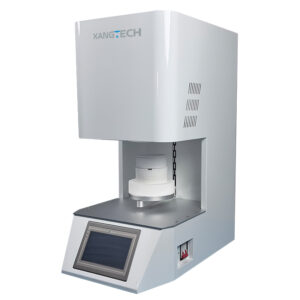
In summary, the technical value of XANGTECH 12S dental sintering furnace does not lie in the superiority of any single feature, but rather in its systematic engineering approach to every stage of the precision zirconia sintering process—including thermal field generation, mechanical transmission, safety monitoring, user interaction, and data management—resulting in a balanced and reliable technical solution. Overall, this is a professional-grade device designed specifically to meet the practical requirements of dental zirconia sintering. It prioritizes the dimensional accuracy, mechanical strength, and aesthetic quality of each batch of restorations, while simultaneously ensuring ease of use and safety for the operator. It not only supports immediate production needs but also provides ample technical scope for long-term quality traceability and process optimization. For dental laboratories, dental milling centers, and research or educational institutions that prioritize process stability, production efficiency, and high-standard quality management, the XANGTECH 12S offers more than just a well-balanced sintering system; it provides a reliable guarantee that spans the entire lifecycle of the equipment. This is precisely why it continues to garner attention and professional recognition among similar products.


